Quick Answer: Mnemba Atoll has Zanzibar’s clearest water and richest reef, but it needs an early start from anywhere outside the north-east. The Blue Lagoon off Michamvi is the calmest and cheapest option for beginners. Pungume is the quietest full-day reef trip. Safari Blue adds average snorkeling to a full ocean day. Nakupenda is a sandbank day with light snorkeling. Chumbe’s protected reef is booked directly with the reserve.
Every snorkeling trip in Zanzibar gets called “crystal-clear” and “the best on the island,” which tells you nothing about what you would actually be paying for. Six reefs and sandbanks cover almost every trip sold here, and they differ a lot: in how clear the water is, how many boats you share it with, how early your pickup is, and how much the day costs once you count your group size and the drive.
This guide puts Zanzibar’s snorkeling spots side by side, compared the way we compare them when guests message us asking which one to book. We’ve scored each spot on the same six criteria. We’ve set out the real price per person at different group sizes, using the prices on our own tour pages. We’ve also matched each reef to the part of the island you’re staying in, because a two-hour drive at dawn can matter more than a slightly better reef.
If you want a fuller picture of the underwater life first, our guide to the best snorkeling in Zanzibar covers that. This page is for choosing between the spots.
How did we score each snorkeling spot?
We scored every spot from 1 to 5 on six things that decide whether a snorkeling day goes well: water clarity, coral and fish, the chance of turtles or dolphins, how easy it is for beginners, how quiet it is, and value for money. The scores come from running these trips, not from brochure copy. Where something depends on factors nobody controls, such as wildlife or the tide, the score reflects a typical day, not the best one.
Two notes on reading the scorecard. “Quiet” is scored the other way round: 5 means the fewest boats. And “Value” means what you get for the price, not only how cheap a trip is. A full day with a seafood lunch can score as well as a short trip that costs half as much.
Caption: Six Zanzibar snorkeling spots scored on the same six criteria. Mnemba leads on reef quality, Pungume and Chumbe on quiet water, and the Blue Lagoon on ease and value.
The pattern is clear. No spot wins on everything. Mnemba has the best reef but the most boats. The Blue Lagoon is the easiest and cheapest but has the fewest big animals. Pungume is the best balance if you’re staying in the south. The rest of this guide explains the scores, so you can decide which trade-off suits you.
How do the six spots compare, one by one?
Each spot below opens with the short version and then covers the details that should change your decision: where the boat leaves from, how long the day is, what the snorkeling is really like, and who should probably choose something else.
Mnemba Atoll: clearest water, earliest alarm
Mnemba is the reef the others are measured against. The island sits off the north-east coast, surrounded by an oval reef that is a protected marine conservation area, and Tanzania Tourism notes that visibility of 20 to 40 metres is normal there. That clarity, plus healthy coral and green turtles we see regularly, is why it scores top marks for clarity and reef.
The cost of that quality is crowds and timing. Mnemba is the most popular reef on the island, so we leave from Matemwe beach at first light, before the wind picks up and before most boats arrive. Our Mnemba Island snorkeling trip is a half day of about four to five hours door to door. That’s easy from Matemwe or Kiwengwa, manageable from Nungwi, and a very early start from Stone Town or Paje. You snorkel the reef only: the island itself is private and nobody can land there.
Choose something else if: you’re staying in the south and don’t want a pickup before 6 am, or you want a lazy day with lunch on a beach rather than a focused reef morning.
Safari Blue: snorkeling as part of a full ocean day
Safari Blue is more a day out than a snorkeling trip, and that’s how it should be judged. You sail by dhow from Fumba into the Menai Bay Conservation Area, a marine reserve of roughly 470 km² declared in 1997 that, according to Wikipedia’s entry on the conservation area, includes Kwale and Pungume among its islands. The day combines a reef stop, a sandbank, a mangrove lagoon swim and a seafood barbecue.
The snorkeling is pleasant but middling: shallower, a little less clear and with less coral than Mnemba or Pungume. Where Safari Blue does well is that everyone in the group enjoys it, including non-swimmers. Our Safari Blue tour runs seven to eight hours, and it’s one of the few trips where we offer both shared and private boats, which matters for pricing (see the cost section below).
Choose something else if: snorkeling is the main reason you’re going. You’ll spend more of the day sailing and eating than in the water.
Pungume Island: the quiet southern alternative
Pungume is the trip we suggest most often to guests who’ve already heard about the crowds at Mnemba. It’s an uninhabited island inside the same Menai Bay reserve, reached by about 45 minutes by boat from Kizimkazi on the southern tip. Fewer boats make the trip, so you’ll often have a stretch of reef and the sandbank almost to yourselves.
The day follows a similar pattern to Safari Blue (snorkel, sandbank, seafood barbecue), but the reef stops get more time and the crossing passes through water where dolphins are often seen. The Menai Bay area has two dolphin species living there year-round, Indo-Pacific bottlenose and Indian Ocean humpback, as Wikipedia’s Menai Bay page summarises. Our Pungume Island tour is a full day of six to seven hours. It’s the obvious full-day choice from Paje or Jambiani and a longer drive from the north.
Choose something else if: you’re staying in Nungwi or Kendwa and don’t want four hours of driving in one day.
Blue Lagoon: gentlest water, closest to the east coast
The Blue Lagoon is the easiest place to start. It sits off the Michamvi Peninsula on the south-east coast, a short boat ride from shore, with coral gardens close to the surface and sandy patches covered in starfish. The water is shallow and sheltered, which is why it scores full marks for beginners.
It’s also clearly the cheapest trip on this list, and a half day of three to five hours including transfers. What you give up is the big animals: turtles and dolphins are not what people come here for. Our Blue Lagoon snorkeling tour times each departure around low tide, when the lagoon is at its calmest and clearest over the coral.
Choose something else if: you’re a confident snorkeler who wants depth and variety. The lagoon may feel small after half an hour.
Nakupenda: a sandbank day with light snorkeling
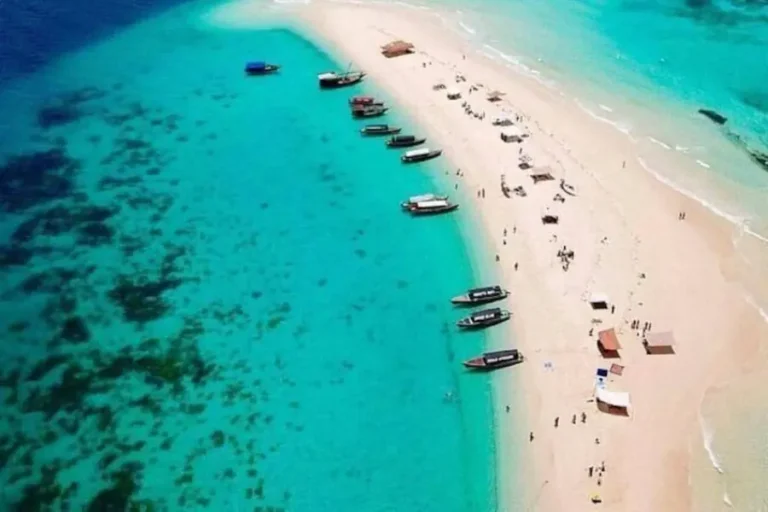
Be honest with yourself about this one: Nakupenda is a sandbank trip first and a snorkeling trip second. The white sandbar appears off Stone Town at low tide, 20 to 30 minutes away by boat, and the day is mostly about swimming in clear shallows, photos and a seafood barbecue on the sand. Snorkeling is over seagrass and scattered coral patches, nice for spotting fish but not a reef experience.
That’s why it scores low on coral and wildlife but full marks for ease. If you’re staying in Stone Town and want a relaxed, beautiful day on the water, our Nakupenda sandbank tour is hard to beat, and the full-day version adds Prison Island and its giant tortoises.
Choose something else if: snorkeling is your main reason for booking. A Mnemba morning or Pungume day will give you much more underwater.
Chumbe Island: the best-protected reef, on the reserve’s terms
Chumbe has arguably the healthiest shallow reef near Zanzibar, and it’s in this comparison for completeness rather than as one of our trips. The island is a private nature reserve west of Stone Town, and Tanzania Tourism’s Chumbe listing explains that it limits the island to 14 guests at a time and can’t take day-trip bookings far ahead, because day visits depend on spare capacity at its eco-lodge.
In practice, you contact the reserve a couple of days before you want to go and arrange it with them directly. Snorkeling is guided by park rangers and timed to the tide. It’s a wonderful day for anyone who cares about reef conservation, but it doesn’t fit the usual “book a tour for Tuesday” planning, which is why it scores lower on value and convenience.
What does each trip really cost per person?
The “from” price on any snorkeling trip, ours included, usually means a price for a larger group. What you’ll actually pay depends mostly on how many of you there are, because the boat, crew and fuel cost the same whether it carries two people or eight. The table below shows our current prices per person at four group sizes.
Caption: Per-person prices at different group sizes. The Blue Lagoon is cheapest at every size, and solo travellers pay the biggest premium on the private full-day trips.
A few things this table shows that the “from” prices don’t:
- Solo travellers pay the most for full days. Pungume costs $130 alone but $60 each for a group of eight. If you’re travelling solo, the shared Safari Blue boat at $90, or a Mnemba morning at $95, gives you a lot more per dollar.
- For couples, the half days are much cheaper. Two people pay $100 in total for the Blue Lagoon and $140 for Mnemba, compared with $170 for a private Safari Blue or $180 for Pungume. The full days include lunch, though, so the real gap is smaller than it looks.
- Nakupenda changes least with group size. The sandbank lunch is prepared per person, so the price stays fairly flat at $80–$100 each.
Two other costs are worth checking whenever you compare quotes from any operator. The first is transport: if you’re far from the departure point, a private Zanzibar transfer is part of the real cost of the day. The second is conservation fees. Since September 2025, Zanzibar has charged non-East African adults $10 a day to enter its marine conservation areas, and the Mnemba Special Area kept its higher $25 adult rate, as The Citizen reported. Our listed prices include government fees, but some cheaper quotes elsewhere don’t, so ask.
Which spot is closest to where you’re staying?
Where you’re staying should narrow your choice before reef quality does. Zanzibar’s snorkeling spots are spread across all four sides of the island, and any trip on the far side of the island means a two-hour drive each way, often before sunrise. The guide below matches each main area to its natural reef.
Caption: The natural snorkeling choice for each of Zanzibar’s main areas, with approximate one-way drive times to the boat departure point.
If you’re splitting your stay between two areas, which many visitors do, schedule each reef while you’re on its side of the island. Snorkel Mnemba during your north-coast nights and the Blue Lagoon or Pungume during your east or south-coast nights, and you’ll avoid long drives entirely. Guests staying near Matemwe can see exactly how the morning works in our guide to Mnemba Island from Matemwe.
Which spot wins in a head-to-head?
Most guests end up choosing between two trips, not six. These are the three comparisons we’re asked about most, each decided by the question that matters.
Mnemba vs Blue Lagoon: which is better for a first-timer?
For a nervous beginner, the Blue Lagoon wins. The water is shallower, calmer and closer to shore, and the trip costs less, so it doesn’t matter much if you spend half the time on the boat. For a beginner who can float comfortably in a life jacket, Mnemba wins, because you’ll see more in one session there than in a whole morning at the lagoon. Our guides are in the water with you at both.
Safari Blue vs Pungume: which full day in the south-west?
If your group includes non-swimmers or people who mostly want the boat, the sandbank and lunch, choose Safari Blue. If at least half the group is there to snorkel, choose Pungume: the reef is better, the boats are fewer, and the crossing goes through good dolphin water. Location also matters. Safari Blue leaves from Fumba, which is closer to Stone Town, while Pungume leaves from Kizimkazi, which is closer to Paje and Jambiani.
Nakupenda vs a Mnemba morning: which from Stone Town?
This one depends on what you want from the day. If you want a beautiful, relaxed day on the water with good food, Nakupenda is 20 minutes away and gives you exactly that. If you want to see a real coral reef, it’s worth the early drive to Mnemba, which is a different kind of experience underwater. Some of our Stone Town guests do both on separate days, and that’s the best answer if you have the time.
How do tides and time of day change each spot?
Every spot here depends on the tide, but in different ways, which is why departure times move from day to day and why booking “the same time as yesterday” doesn’t always work.
- Mnemba: The wind matters more than the tide. Mornings are calmest, so boats leave at first light.
- Blue Lagoon: Best around low tide, when the shallow coral and starfish beds are easiest to see.
- Nakupenda and Pungume: The sandbanks only appear at low tide, so the whole day is timed around them.
- Safari Blue: The tide decides the order of the stops. Our Safari Blue itinerary guide explains why the sandbank sometimes comes first and sometimes last.
- Chumbe: The opposite of the sandbanks. Snorkeling is only allowed when the tide is high enough to protect the reef.
Season matters as much as the daily tide. All of these trips run year-round, but the long rains from April to May bring rougher water and lower visibility, especially on the open crossing to Mnemba. Our month-by-month guide to the best time to visit Zanzibar shows which months are clearest.
What do we tell guests before they choose?
After years of matching people to reefs, our advice comes down to a few rules that apply whichever spot you choose.
Pick by your weakest swimmer, not your strongest. If one person in the group is nervous in the water, choose a spot they’ll enjoy, such as the Blue Lagoon, Safari Blue or Nakupenda. A great reef isn’t a great day if someone spends it anxious on the boat.
Don’t book two full ocean days back to back. Sun, salt and a 6 am pickup add up quickly. Put a half day or a land day between Safari Blue and Pungume, or between any two full days.
One reef trip plus one sandbank day covers most holidays. If you only have time for two marine trips, choose one serious snorkeling morning (Mnemba or Pungume) and one relaxed sandbank day (Nakupenda or Safari Blue). Doing three reef trips in a week usually gives diminishing returns.
Bring your own mask if you have one. We provide gear on every trip, but a mask that already fits you makes a real difference. Our checklist of what to bring on a Zanzibar boat and snorkeling trip covers the rest.
Tell us where you’re staying before you choose. Half the questions we get answered in this guide can be settled in one WhatsApp message once we know your hotel and your dates.
Frequently Asked Questions About Zanzibar Snorkeling Spots
Which Zanzibar snorkeling spot has the clearest water?
Mnemba Atoll has the clearest water around Zanzibar, with visibility of 20 to 40 metres on a good day. That’s because it’s a protected reef on the open north-east coast, away from river runoff and busy harbours. Pungume and the Blue Lagoon come next on calm days, while Nakupenda and the Safari Blue stops are a little less clear because the water is shallower and sandier. Clarity at every spot is best in the dry months of June to October and December to February, and in the morning before the wind picks up.
Which snorkeling spot is best for beginners and children?
The Blue Lagoon off Michamvi is the gentlest place to start. The water is shallow, sheltered and calm, the coral sits close to the surface, and the starfish beds keep children interested. Nakupenda is just as easy because much of the snorkeling is in waist-deep water around the sandbank. Mnemba is also fine for beginners wearing a life jacket, with a guide in the water beside them, but the boat ride out is longer and the sea can be more choppy. For a nervous first-timer, start at the lagoon and save Mnemba for later in the trip.
Is Pungume better than Safari Blue?
For snorkeling, yes. Pungume’s reef stops are clearer and quieter, and the crossing from Kizimkazi passes through water where dolphins are often seen. Safari Blue is the better day out for mixed groups, because its sandbank, mangrove lagoon and dhow sailing suit people who don’t want to spend much time in the water. Both are full days with a seafood lunch and both are inside the Menai Bay Conservation Area. Choose Pungume if you’re staying in the south-east and snorkeling is the priority, and Safari Blue if you’re near Stone Town or travelling with non-swimmers.
Is Mnemba worth the early start from Paje or Stone Town?
For keen snorkelers, usually yes. Mnemba’s reef is noticeably better than anything else on a standard tour, and the pickup of 5:45–6:30 am is the cost of reaching it before the wind and the other boats. If you’re only lukewarm about snorkeling, though, a closer trip will give you a better overall day: the Blue Lagoon from Paje or Nakupenda from Stone Town. A good compromise is to snorkel Mnemba while you’re staying on the north or north-east coast if your trip includes a few nights there.
What is the cheapest snorkeling trip in Zanzibar?
Of the spots compared here, the Blue Lagoon is the cheapest, at $60 for a solo traveller and $30 per person in a group of eight. It’s also a half day, so it leaves your afternoon free. Mnemba is the next most affordable, from $95 for one person down to $55 each in larger groups. Full days like Safari Blue, Pungume and Nakupenda cost more but include a seafood lunch. Whichever you choose, check whether hotel transfers and conservation fees are included before you compare prices from different operators.
Are conservation fees included in snorkeling trip prices?
It depends on the operator. Zanzibar charges entry fees for its marine conservation areas: since September 2025, non-East African adults pay $10 per day for areas such as Menai Bay, and the Mnemba Special Area charges $25 per adult. Our tour prices list government fees as included, so the price you see covers them. Some cheaper offers you’ll find online quote the boat only and add fees on the day, which can make a $40 trip cost $65. Always ask for the total price per person.
Can I visit Chumbe Island on a day trip?
Yes, but it doesn’t work like other trips. Chumbe is a private nature reserve that limits the island to a small number of guests at a time, and day visits depend on spare space at its eco-lodge. That means it generally can’t take day-trip bookings weeks ahead. You contact the reserve a couple of days before the date you want and book directly with them. The day includes guided snorkeling, a forest walk and lunch on the island. It’s a great experience but doesn’t suit tight, pre-booked itineraries.
Can I combine two snorkeling spots or activities in one day?
Snorkeling two separate reefs on the same day isn’t practical, because they’re on different coasts and each depends on its own tide. Pairing a snorkeling trip with a nearby land activity works very well, though. From the south-east, our Jozani Forest and Blue Lagoon combo adds the red colobus monkeys to a lagoon morning. In the north, the Mnemba and swimming with turtles combo follows the reef with an afternoon at Baraka’s turtle lagoon. Both save you a second set of transfers.
Final thoughts
Comparing Zanzibar’s snorkeling spots comes down to three questions: how good does the reef need to be, how far are you willing to drive, and how many of you are paying for the boat. The short version:
- Mnemba has the best reef, if you’re nearby or willing to start early.
- Pungume is the best full day for snorkelers in the south, with far fewer boats.
- The Blue Lagoon is the easiest and cheapest, and the right first trip for nervous swimmers.
- Safari Blue and Nakupenda are excellent days on the water where snorkeling is one part of the day, not the whole of it.
We run these trips every week and are happy to tell you honestly which one fits your hotel, your dates and your group. Send us a WhatsApp at +255 773 315 736 or ask our team which reef suits your trip, and we’ll suggest the right one.