Quick Answer: A Safari Blue day in Zanzibar lasts about 7–8 hours. Guests are collected from their hotel early in the morning and driven to Fumba village on the southwest coast. From there a traditional dhow sails into the Menai Bay Conservation Area for reef snorkeling, a sandbank stop with tropical fruit, a seafood barbecue lunch on a small island, and a swim in a mangrove lagoon, then returns to Fumba in the late afternoon. The tide decides the order of the stops on any given day.
The listings make Safari Blue sound simple: sail, snorkel, eat, swim. Then you try to plan the rest of your week around it, and the practical questions start. What time will the driver arrive? How long is the drive from Nungwi? When is lunch? Will you be back in time for dinner? And why did your friend’s trip visit the sandbank first when yours seems to start at the reef?
I’m Rama. I’ve been guiding in Zanzibar since 2016, and my team sails Safari Blue through Menai Bay most weeks of the year. This guide covers the Safari Blue Zanzibar itinerary as it actually runs, one hour at a time. It explains what happens at each stop, how long you spend there, and how pickup times change depending on where you’re staying. It also explains how the tide reshuffles the day, which almost no one tells you about. By the end you’ll know what your day will look like and how to plan around it.
What Does a Safari Blue Day Look Like at a Glance?
Safari Blue is a single loop through Menai Bay. You leave from Fumba in the morning, make four main stops (reef, sandbank, island lunch, mangrove lagoon) and sail back to Fumba in the afternoon. Including the road transfers, you’ll be out for most of the day.
 Total Duration7–8 hours door to door
 Departs FromFumba village, southwest coast
 Sailing AreaMenai Bay Conservation Area
 BoatTraditional Swahili dhow
 Main StopsReef · Sandbank · Island · Lagoon
 LunchSeafood BBQ (veg on request)
 DifficultyEasy · all ages
 PriceFrom $70 / person
Caption: The core facts of a Safari Blue day. Duration, departure point, stops and starting price are all taken from Rama’s live tour page.
The bay itself is part of the experience. Menai Bay has been a protected area since 1997 and covers roughly 470 km², which makes it Zanzibar’s largest marine conservation area. This is why the reefs, sandbanks and mangroves you visit on the itinerary are still in good shape.
What Time Does Safari Blue Start, and When Will You Be Picked Up?
Every boat leaves from Fumba, so your pickup time depends on how far your hotel is from Fumba. Guests in Stone Town are usually collected around 8:00–8:30 am. Guests in Nungwi, Kendwa or along the east coast are collected much earlier, often between 6:30 and 7:00 am.
The boats leave Fumba mid-morning together. Your driver works backwards from that departure time, which means the far north and the east coast get the earliest starts.
How long is the drive to Fumba from your area?
Fumba sits southwest of Stone Town, about 30 minutes’ drive from the old town. Here’s how the morning usually looks from the main areas where our guests stay:
 Stone Town & Fumba area25–40 min8:00–8:30 am
 Paje · Jambiani · Michamvi1 hr 15 – 1 hr 307:00–7:15 am
 Matemwe · Kiwengwa · Pwani Mchangani1 hr 30 – 1 hr 456:45–7:00 am
 Nungwi · Kendwa1 hr 45 – 2 hrs6:30–6:45 am
 Drive times depend on traffic around Stone Town and on the day’s tide. If boats need to leave earlier to catch the sandbank, pickups move earlier as well.
Caption: Typical pickup windows from Zanzibar’s main areas. The earliest starts are on the north and east coasts because every Safari Blue boat leaves from Fumba.
If you’re staying in the north or on the east coast, it’s better to know about the long drive before you book than to find out at 6:30 am. Our Zanzibar transfer service uses air-conditioned vehicles, so the drive is comfortable, and on the way back most guests fall asleep before the first roundabout.
What happens when you arrive at Fumba?
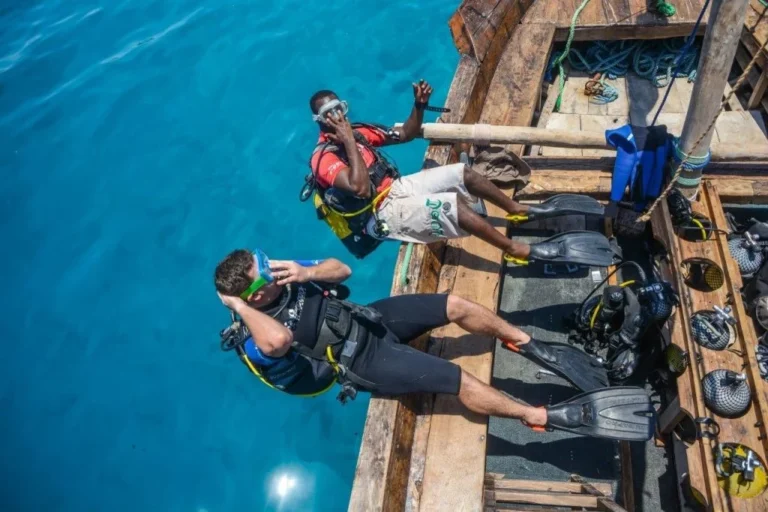
You’ll have about 15–20 minutes on the beach before boarding. Use it to visit the toilet, put on sunscreen and leave anything you won’t need in the vehicle. Your guide gives a short briefing covering the day’s order of stops (the tide decides this, as explained below), safety on board and how the snorkeling works. Masks and fins are handed out on the dhow, so you don’t need to carry them.
What Happens at Each Stop? The Safari Blue Itinerary Hour by Hour
Here is how a typical Safari Blue day runs. The times assume a standard mid-morning departure from Fumba. The tide can swap the order of the middle stops, but the overall shape of the day stays the same.
Hour by hour
A Typical Safari Blue Day
Times are approximate. The tide sets the exact order of the middle stops.
- 6:30–8:30
 Hotel pickup
Collected from your hotel, with the time depending on your area. Drive to Fumba village.
- ~9:00
 Fumba briefing
Meet the crew, hear the day’s plan and board the dhow.
- 9:15–10:30Sail into Menai Bay
Cruise out past the mangrove coast and watch for dolphins along the way.
- 10:30–11:30
 Reef snorkeling
Guided snorkel over protected coral. Gear provided and the guide stays in the water with you.
- 11:30–12:30
 Sandbank & fruit
Walk out onto the white sandbank, swim in the shallows and taste fresh island fruit.
- 12:30–14:30
 Island seafood BBQ
Long lunch on the island with grilled seafood, local sides and free time on the beach.
- 14:30–15:30
 Mangrove lagoon
Calm swim in a natural pool ringed by mangrove trees.
- 15:30–16:30Sail home to Fumba
Golden-hour cruise back across the bay.
- 16:30–18:30
 Hotel drop-off
Stone Town guests are back first. North and east coast guests arrive around sunset.
 Nothing is skipped when the order changes. The crew rearranges the stops so each one is visited when the water is best for it.
Caption: A typical Safari Blue day from pickup to drop-off. On many days the sandbank and the reef swap places depending on the tide.
Sailing out into Menai Bay (around 9:15 am)
The first hour on the water is for settling in. The dhow is a traditional sailing vessel of the Indian Ocean, and the crew raises the sail when the wind allows. On calm days a small engine keeps the boat on schedule. Find a seat with shade if you burn easily, keep your camera ready, and watch the water. Menai Bay has resident dolphins, and the crew will slow down if a pod appears. Sightings are a bonus, never a promise, as I explain in our guide to seeing dolphins in Zanzibar.
Snorkeling the reef (mid-morning, about an hour)
The crew anchors near a protected coral reef, and you enter the water from the side of the dhow with your guide. Plan on 45–60 minutes in the water. The reef is shallow and the water is warm, so beginners usually relax within a few minutes. Expect parrotfish, butterflyfish, angelfish, starfish and healthy coral. If you’d rather stay dry, the dhow is a pleasant place to wait. For how this reef compares with Mnemba and Blue Lagoon, see our breakdown of the best snorkeling in Zanzibar.
The sandbank and tropical fruit tasting (late morning)
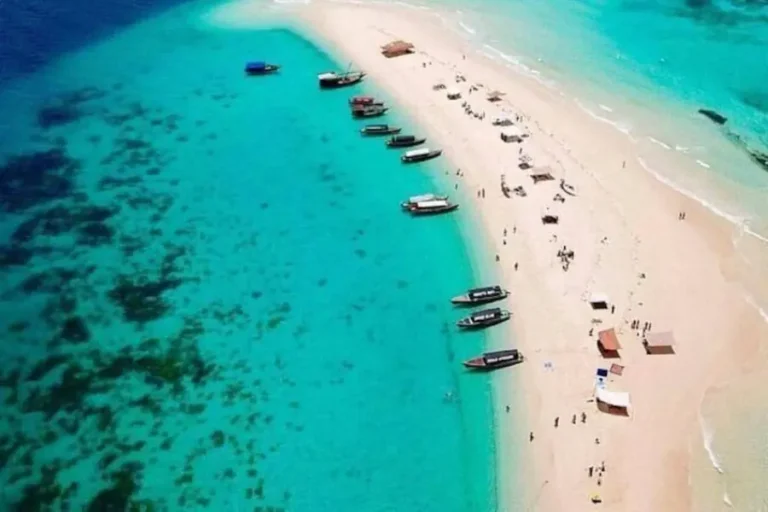
The sandbank only appears when the tide is low, which is why the timing of this stop matters most. You’ll wade or step off onto a strip of white sand surrounded by shallow turquoise water. The crew sets out fresh seasonal fruit, which might be mango, pineapple, passion fruit, coconut or whatever is ripe that week. This is the stop for photos, so give yourself time to just float in the shallows. You’ll usually have about an hour.
Seafood lunch on the island (early afternoon, the longest stop)
Lunch is the slow middle of the day. On most trips it is served on Kwale Island, which Tanzania’s official tourism board also describes as the lunch stop on Safari Blue. The crew grills seafood over charcoal and serves it with rice, local sides and more fruit. Chicken or vegetarian plates are available if you mention them when booking. After lunch you have free time to walk the beach, look for hermit crabs among the coral rocks, or visit the old baobab tree. Plan on roughly two hours here. Most guests find that this is when they finally slow down.
The mangrove lagoon (mid-afternoon)
The last swim of the day is in a natural lagoon surrounded by mangrove trees. The water is calm and enclosed, and a lot of guests end up liking it more than the reef. It is also gentle enough for children and nervous swimmers. Whether you reach it on foot, by dhow or by small canoe depends on how much water is in the channel at the time.
The sail home and drop-off (late afternoon)
The sail back to Fumba is the quietest part of the day. The light turns golden, the wind usually helps, and conversation on board slows down. Expect to reach Fumba around 4:00–4:30 pm. Stone Town guests are usually back at their hotel by 5:00 pm. Guests in Nungwi, Kendwa or on the east coast should plan to arrive around sunset and keep that evening free.
Why Does the Order of Stops Change From Day to Day?
The order changes because Menai Bay is tidal, and the sandbank and lagoon are only at their best at certain water levels. A good crew plans the day around the tide table instead of a fixed script. You still get every stop, just in the order the ocean allows that day.
Hotel pickupFumba briefingSail into Menai BayReef snorkelingSandbank & fruitIsland seafood BBQMangrove lagoonSail home to FumbaHotel drop-offNothing is skipped when the order changes. The crew rearranges the stops so each one is visited when the water is best for it.Caption: The same four stops, arranged in two different orders depending on when low tide falls. The moon phase changes how dramatic the tide is.
How does the tide shape the sandbank?
Menai Bay’s sandbanks rise out of the sea at low tide and disappear again as the water comes back in. That’s why several operators describe it as a sandbank that “grows and disappears.” If low tide is in the morning, you’ll visit the sandbank first. If it falls after lunch, the reef and the meal come first and the sandbank waits until the water drops. The lagoon is the reverse case: it’s best with enough water in it for a proper swim, so it often comes later as the tide rises.
What’s the difference between spring and neap tides?
Tides are strongest around the full moon and new moon. These are called spring tides, and the name has nothing to do with the season. On spring-tide days the sandbank is at its biggest and most impressive, but the crew has less flexibility with timing, so pickups can move a little earlier. During the half-moon neap tides the water moves less, the sandbank is smaller, and the schedule is more relaxed. If the sandbank is the photo you came for, ask us when you book which dates in your trip fall closest to a spring tide.
How Should You Pace Yourself Through a 7–8 Hour Day?
Safari Blue is easy, but it’s long and you’re in the sun the whole time. The most common way guests spoil the day is by treating it like a short morning trip. A little pacing keeps you comfortable until the sail home.
Before you leave the hotel
Eat breakfast, even if it’s very early. Lunch isn’t served until about 12:30, and swimming makes you hungry quickly. If your pickup is before your hotel’s breakfast opens, ask the kitchen the night before for a packed breakfast. Most hotels on the north and east coasts are used to this request. Put on sunscreen before you get in the vehicle. If you get seasick, take your tablet before pickup, not on the boat. For a complete packing list, see our guide to what to bring on a Zanzibar boat and snorkeling trip.
On the water
Drink regularly at every stop, not only when you feel thirsty, because the sea breeze hides how much you’re sweating. Reapply sunscreen after the reef and again after lunch. You don’t have to swim at every stop. Plenty of guests snorkel in the morning and then simply float in the lagoon later, and that is a perfectly good way to do the day.
After you get back
Keep the evening free. Guests coming back from Safari Blue are almost always pleasantly tired and a little sunburnt. Don’t book a sunset cruise or a late dinner reservation in Stone Town for the same night, especially if you’re staying in the north. If you’re planning the rest of your week, see our best time to visit Zanzibar guide for how the seasons affect sea days.
How Does a Private Safari Blue Itinerary Differ From a Shared One?
The stops are the same on both. What changes is who decides the pace. On a shared dhow, the crew keeps the whole group on the schedule set for that tide. On a private dhow, the boat belongs to your group, so you can spend longer at the stops you like, skip one you don’t, or start earlier to reach the sandbank before anyone else.
Families with small children and honeymooners usually notice the difference most. If your child is asleep after lunch, a private crew can wait. If you want the sandbank to yourselves for photos, a private boat that leaves early has the best chance of getting it. Our honest comparison in Safari Blue: what’s included and is it worth it covers the price difference between private and shared boats, and our Zanzibar tour cost guide shows how it compares with other excursions on the island.
A Local Guide’s Notes on Getting the Itinerary Right
After many seasons running this trip, these are the scheduling decisions that make the biggest difference to how the day goes:
- Don’t book Safari Blue on your arrival day or your departure day. It’s a full-day trip with a fixed boat departure, and it can’t be fitted around a flight.
- Leave a spare day after it. If the sea is unsafe and we move your trip, you’ll want an open date to move it to. This is much easier early in your holiday than on your last full day.
- North-coast guests: consider splitting your stay. If Safari Blue and other southern trips are your priority, a night or two in Stone Town cuts your pickup from about 6:30 am to about 8:00 am.
- Tell us dietary needs when booking, not on board. The barbecue is prepared fresh on the island, so vegetarian or allergy-friendly plates have to be planned in advance.
- Ask about the tide when you book. It’s a quick question, and the answer tells you which order your day will probably run in.
If you’d like help fitting Safari Blue around the rest of your trip, send us a message on WhatsApp with your dates and hotel, and we’ll suggest the best day based on the tides and your pickup area.
Frequently Asked Questions About the Safari Blue Itinerary
What time does Safari Blue finish?
Boats usually reach Fumba between 4:00 and 4:30 pm. Your arrival at the hotel then depends on where you’re staying. Stone Town guests are typically back around 5:00 pm. Guests in Paje, Jambiani, Kiwengwa, Nungwi or Kendwa are usually back between 5:45 pm and sunset. Tide and sea conditions can move the return by up to half an hour either way, so don’t plan anything time-critical for that evening, such as a flight, a ferry or a fixed dinner booking.
Can I do Safari Blue if I’m staying in Nungwi?
Yes. Every Safari Blue boat leaves from Fumba, so guests from Nungwi and Kendwa have a longer road transfer, roughly 1 hour 45 minutes to 2 hours each way. Pickup is usually around 6:30 am and you’ll be back near sunset. The drive is the main cost of staying in the north. Many of our guests think the day is still worth it, but if you’re spending a few nights in Stone Town during your trip, booking Safari Blue from there makes the day much shorter.
Why did my friend’s Safari Blue trip visit the stops in a different order?
Because the tide sets the order. The sandbank is only exposed around low tide, and the mangrove lagoon is better with more water in it, so the crew plans the running order for each day from the tide table. On one day the sandbank comes first; on another it comes after lunch. The stops are the same. The order simply follows the tide that day.
Do you sail the whole way or use an engine?
The dhow raises its sail whenever the wind allows. Sailing across Menai Bay is one of the best parts of the day, especially on the way home. On calm or windless days a small engine helps the boat keep to the tide-based schedule, because arriving late at the sandbank can mean finding it already under water. Most days use a mix of sail and engine.
Will we visit the baobab tree every time?
The baobab is on Kwale Island, where lunch is usually served, so most guests see it during free time after the meal. Whether you visit depends on how long lunch runs and how much time the crew needs for the sail back on that tide. If seeing it matters to you, tell your guide in the morning and they’ll make time for it after lunch.
Can I shorten the day or leave early?
On a shared boat, no. Everyone sails together and returns together, so the whole group keeps the same schedule. On a private boat you have more flexibility to cut a stop, shorten lunch or head back earlier, though the boat still has to work with the tide. If you have young children or limited energy, mention it when booking and we’ll recommend whether a private boat is the better option.
Can I combine Safari Blue with another tour on the same day?
Not realistically. With pickup, sailing and the drive back, Safari Blue fills most of the day, and you’ll be tired by the time you return. Book other trips on separate days. If you want a shorter ocean trip on a day when you have less time, the half-day Nakupenda sandbank tour gives you a sandbank and seafood in much less time.
What happens to the itinerary if the weather turns?
Safety decides. Short tropical showers rarely change anything because the sea stays warm and the trip carries on. If wind or sea conditions are unsafe, the crew may shorten exposed sections, reorder stops, or reschedule the trip with you. This is the main reason we recommend leaving a free day after your planned Safari Blue date, so that a postponed trip still fits into your holiday.
Final Thoughts
Once you know the timings, the Safari Blue Zanzibar itinerary is easy to plan around: a morning pickup, a mid-morning departure from Fumba, four stops arranged around the tide, and a golden-hour sail home.
The short version:
- Expect 7–8 hours door to door. Pickups run from about 6:30 am in the north to about 8:30 am in Stone Town.
- The four stops are reef, sandbank, island lunch and mangrove lagoon, and the tide decides their order.
- Lunch on the island is the longest stop, with free time afterwards.
- Eat breakfast, keep the evening free, and leave a spare day after your Safari Blue date.
You now know exactly how the day runs. Our crew knows Menai Bay’s tides well and will plan your stops to suit them. When you’re ready, book the Safari Blue tour with Rama Zanzibar and we’ll match your date to the best tide of your week.