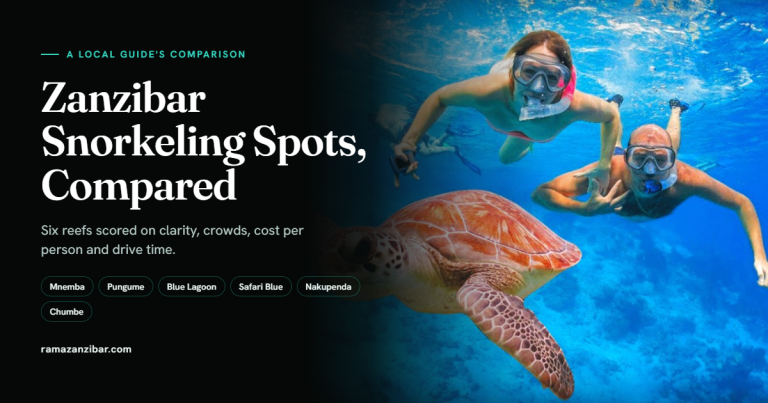
Quick Answer: The most common mistakes on Zanzibar marine tours are choosing a tour that doesn’t match your goal, ignoring the tide, saving boat trips for your last day, skipping seasickness prevention, using non-reef-safe sunscreen, walking barefoot over coral and sea urchins, lifting starfish for photos, and expecting guaranteed dolphin sightings. Most are easy to avoid with a little planning and an operator who tells you the truth.
Most bad days at sea in Zanzibar have nothing to do with the ocean. The weather was fine, the boat was fine, the reef was beautiful. What went wrong was something small decided days earlier: a trip booked for the wrong tide, a Mnemba morning squeezed into the last day before a flight, a big breakfast before a choppy crossing, or a tour picked because it was cheapest.
We have been taking guests out on the water around Zanzibar since 2016, and the same mistakes come up week after week. None of them are dramatic, and almost all of them are avoidable. This guide lists the twelve we see most often on Zanzibar marine tours, why each one happens, and the simple fix.
It is organised in the order you will meet them: booking mistakes first, then the night before and the morning of your trip, then what happens in the water, and finally dolphins, where expectations matter most.
Why Do Marine Tours in Zanzibar Go Wrong?
Because the ocean, not the clock, runs the schedule. Three natural forces shape every boat day in Zanzibar, and most mistakes come from planning as if they don’t exist:
- Tides. Zanzibar has two high and two low tides every day, and the range is large. Sandbanks appear and disappear, lagoons drain, and the order of stops on some trips changes daily.
- Monsoon winds. The Kusi blows from the south-east from roughly June to September, and the Kaskazi from the north-east around December to February. Wind direction decides which coasts are calm and which are choppy.
- Wild animals. Dolphins, turtles and reef fish are not on a timetable. A responsible operator can improve your chances but can never promise them.
Keep those three in mind and most of the mistakes below explain themselves. Our guide to the best time to visit Zanzibar covers the seasons month by month if you are still choosing your travel dates.
Which Booking Mistakes Cost Travellers the Most?
The costliest mistakes happen before you ever step on a boat. These five shape the whole day, and none of them can be fixed once you are on the water.
Mistake 1: Choosing a Tour That Doesn’t Match What You Want
This is the most common mistake we see. Every marine tour in Zanzibar is good at something different, and guests often book the famous name rather than the right fit.
The typical mismatches:
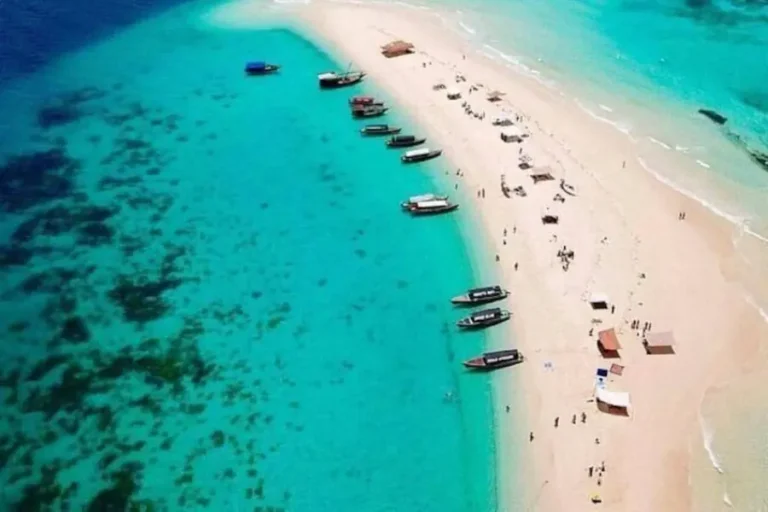
- Booking Nakupenda Sandbank for serious snorkeling. Nakupenda is a beautiful sandbank day with light, beginner-friendly snorkeling. It is not a reef trip.
- Booking Safari Blue to see as much reef as possible. Safari Blue is a relaxed full day of sailing, sandbanks, a short reef stop and a seafood lunch. The reef is one part of the day, not the centre of it.
- Expecting to walk on Mnemba Island. Mnemba Island itself is private and guests cannot land there. You snorkel the protected atoll around it from the boat.
If marine life is your priority, Mnemba Island snorkeling is the strongest choice on the island. If you want an easy day with food and beaches, Safari Blue or Nakupenda will make you happier than Mnemba.

 Best reef snorkeling
 Wild dolphins
 Full relaxed day with lunch
 Short trip, sand and photos
 Easy trip near Paje
 Landing on Mnemba Island
Caption: The right tour for each common goal, and the booking trap that catches people most often for that goal.
Once your goal is clear, the rest of the planning becomes simple. If you are torn between two trips, tell us on WhatsApp what matters most to you and we will tell you honestly which one fits.
Mistake 2: Ignoring the Tide
Many Zanzibar marine trips are tide-dependent, and booking without considering it is the second most common mistake.
Here is how the tide affects the main trips:
- Nakupenda Sandbank only exists at low tide. Departure times move every day to follow it, and the sandbank shrinks as the water rises.
- Safari Blue changes the order of its stops depending on the tide, so the sandbank and reef are visited when each is at its best.
- East coast lagoons, including the Blue Lagoon near Michamvi, are shallow. At very low tide, boats and snorkelers can struggle to reach the good water.
The fix is simple: don’t lock in a fixed departure time with a tide-dependent trip. Let your operator set the time. We plan sandbank and lagoon trips around the tide table for your exact date, and confirm the time the day before.
Mistake 3: Saving Boat Days for the End of Your Trip
If there is one marine trip you would hate to miss, do not schedule it for your last full day.
Boat trips can be postponed when the sea is unsafe. Light rain rarely stops a tour, but strong wind or rough water can, especially during the April–May long rains and on breezy Kusi days. If your Mnemba morning is cancelled the day before your flight, there is no second chance.
Book your most important marine tour early in your stay, ideally in the first two or three days, and keep one flexible day spare. Under our booking and cancellation policy, a trip changed for unsafe sea conditions is rescheduled where possible, or we discuss alternatives with you. A spare day makes that easy.
Mistake 4: Underestimating the Drive to the Departure Beach
Zanzibar looks small on a map, but roads are slow and departure beaches are spread around the island. Mnemba trips leave from Matemwe on the north-east coast, Safari Blue leaves from the Fumba area in the south-west, and Nakupenda leaves from Stone Town.
That means:
- A guest staying in Stone Town can spend an hour or more in the car to reach Matemwe.
- A guest staying in Nungwi or Kendwa faces a long drive for Safari Blue.
- Early marine departures often mean very early pickups from the far side of the island.
None of this is a reason to skip a trip. It is a reason to expect it, and to check that hotel pickup is arranged properly. Our guide to Mnemba Island from Matemwe shows how pickup times work from different parts of the island.
Mistake 5: Booking on Price Alone, or From the Beach
The cheapest quote on the beach is rarely the cheapest day. When a marine tour is unusually cheap, something is usually missing. Ask these questions before you pay anyone:
- Are government and conservation fees included, or collected on the day?
- Are life jackets on board for every guest?
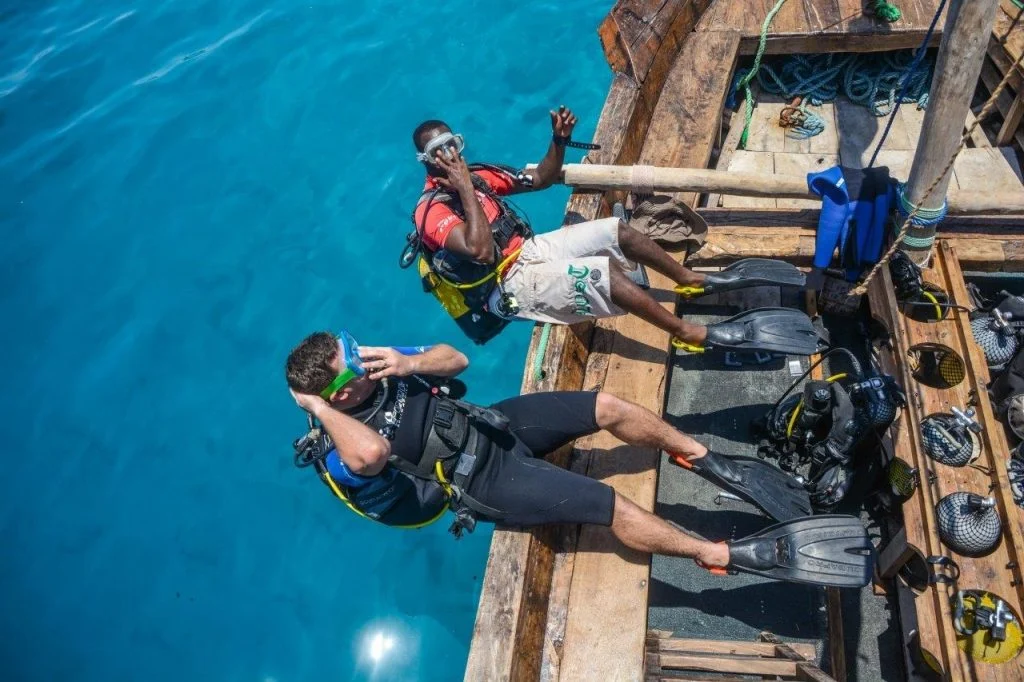
- Is snorkel gear included and in good condition?
- Is hotel pickup included, and from where?
- Is the boat licensed, and does the crew have a radio or phone signal at sea?
Price differences between legitimate operators usually come from group size, not quality. On our dolphin tour, for example, the per-person price falls from $95 for a solo traveller to $50 each for groups of seven to fourteen, and every tier includes the boat, guide, gear and all government fees. Our guide on how much Zanzibar tours cost explains what a fair price looks like for each excursion.
What Should You Get Right the Night Before and the Morning Of?
Three small preparation mistakes ruin more boat days than bad weather does. All three are fixed in a few minutes.
Mistake 6: Assuming Seasickness Only Happens to Other People
Even on a calm day, a small boat crossing open water moves differently from a ferry or a ship. Guests who have never been seasick are often surprised, usually around the middle of a choppy crossing.
What actually helps, according to Mayo Clinic’s motion sickness guidance:
- Look at the horizon or a fixed point on the coast, not at your phone.
- Keep your head as still as possible.
- If you use an over-the-counter remedy, take it before boarding, not after you feel sick. Ask a pharmacist which one suits you.
- Eat lightly. Plain food and water help; a heavy breakfast and a late night of drinks do not.
On the boat, sit towards the middle, where movement is gentlest, and tell your guide early if you start feeling unwell. Getting into the water often helps, too.
Mistake 7: Wearing the Wrong Sunscreen, and Not Enough Cover
Zanzibar sits just south of the equator, and the sun on the water is far stronger than most visitors expect. The classic snorkeling burn is on the back of the legs and shoulders, because they face the sky for an hour while you look down at the reef.
The second half of this mistake is the sunscreen itself. Research led by NOAA found that oxybenzone, a common chemical sunscreen filter, is highly toxic to young corals and enters the sea directly from swimmers.
The better approach:
- Use a mineral sunscreen based on zinc oxide or titanium dioxide.
- Apply it at your hotel before pickup, not on the boat just before you jump in.
- Wear a rash guard or long-sleeved swim top for snorkeling. It protects better than any cream and does not wash off.
Our packing guide on what to bring on a Zanzibar boat and snorkeling trip lists exactly what we provide and what you should pack.
Mistake 8: Keeping Quiet About Your Swimming Ability
Many guests feel embarrassed to say they are not confident swimmers, so they say nothing and then struggle quietly in deep water. Please don’t do this.
Non-swimmers can enjoy almost every marine trip in Zanzibar. Life jackets are on board, and guides can stay beside nervous snorkelers, choose shallower spots and keep a float nearby. But the crew can only help if they know.
Tell your guide before the first stop, honestly: “I can’t swim,” “I can swim but deep water makes me nervous,” or “I’ve never snorkeled.” It changes how they run your stop, and it makes the day better for everyone on board.


Caption: A three-stage checklist covering the habits that prevent most problems on Zanzibar boat trips, from the night before to the first snorkel stop.
What Do People Get Wrong Once They’re in the Water?
In-water mistakes are about protecting yourself and the reef at the same time. Fortunately, the same habits do both.
Mistake 9: Standing on Coral and Walking Barefoot in the Shallows
When snorkelers get tired, their instinct is to stand up. Over a reef, that means standing on living coral, which breaks easily and grows back very slowly. It also means standing where sea urchins live.
Sea urchins are common in shallow rocky and coral areas around Zanzibar. Stepping on one is not life-threatening, but it is painful, and the spines break off easily in the skin.
How to avoid it:
- Float, don’t stand. If you need a rest, signal your guide, hold onto a float or the boat, or turn onto your back.
- Wear fins in the water and reef shoes in rocky shallows, especially when wading at low tide.
- Never put your hands down on the seabed to steady yourself.
If someone does step on an urchin, don’t dig at the spines with a needle or tweezers, as they shatter. The Divers Alert Network advises that there is no single accepted treatment, that care is symptomatic, and that a medical check is always worthwhile. Our guides carry a basic first-aid kit, and we can direct you to a local clinic if a spine is deep or near a joint.
Mistake 10: Picking Up Starfish for Photos
Starfish photos are hugely popular in Zanzibar, especially on east coast trips. The problem is that many visitors lift starfish out of the water to pose with them.
Starfish breathe through their skin and tiny tube feet, and taking them out of the water, even for a short photo, stresses and can harm them. Sunscreen and insect repellent on your hands make it worse.
The better photo is the one where the starfish stays in the water. Crouch down beside it, let your guide frame the shot, and leave it exactly where you found it. Our guides keep starfish in the water on every trip, and they will help you get a good picture without lifting anything.
The same rule applies to everything on the reef: no touching coral, no feeding fish, no collecting shells with living animals inside.
Mistake 11: Struggling With a Leaky, Foggy Mask Instead of Fixing It
A badly fitted mask can ruin a snorkel stop. Water leaks in, the glass fogs, and the guest spends twenty minutes adjusting it instead of looking at fish.
A few minutes on the boat fixes it:
- Test the fit before you get in. Hold the mask to your face without the strap and breathe in gently through your nose. If it stays put, it fits.
- Push hair completely out of the mask seal. One strand is enough to cause a leak.
- Rinse the inside with seawater just before you start, and ask your guide for anti-fog if it keeps misting.
- Don’t wear the strap too tight. A tight strap distorts the seal and causes leaks.
Ask for a different size straight away if it doesn’t fit. A good crew always carries spares. Guests who wear glasses should mention this when booking so we can discuss the options.
How Do You Get Dolphin Encounters Right?
Dolphin trips create the biggest gap between expectations and reality of any marine experience in Zanzibar, so they deserve their own section.
Mistake 12: Expecting Guaranteed Dolphins, and Rewarding Operators Who Promise Them
The dolphins around Zanzibar are wild. They feed, rest and travel where they choose, and no operator can call them, reserve them or guarantee them. On our dolphin tour at Mnemba Atoll, we estimate around an 80% chance of seeing dolphins, and we say clearly that this is an estimate, not a promise.
When an operator does promise a sighting, the usual way to deliver it is to chase. Research on dolphin tourism off Zanzibar’s south coast, summarised in the International Whaling Commission’s whale-watching handbook, recorded behavioural changes in dolphins exposed to tourist boats. It also found that only around 60% of boat operators said they followed the existing guidelines, and warned that continued pressure could push dolphins out of the area.
This is part of why we run our dolphin trips at Mnemba, early in the morning, with a simple rule: if the dolphins move away, we let them go. There is more on this in our guide to whether you can see dolphins in Zanzibar.
What Does Good Dolphin Etiquette Look Like?
Good etiquette mostly means letting the crew decide when, and if, you get in the water. Calm dolphins that stay near the boat give the best encounters; stressed dolphins simply leave.
Caption: How to behave around wild dolphins so the encounter lasts longer and the animals stay calm.
If the crew says the pod is moving on, enjoy the moment from the boat and move on to the reef. A short, calm encounter is a far better memory than a stressful chase.
Local Insight: What Do Our Best Marine Guests Do Differently?
After years on the water, we notice that the guests who have the best days share a handful of small habits. None of them cost anything:
- They message us the evening before to confirm pickup time and place, and to check whether the tide has moved the departure.
- They ask “what’s this trip really like?” instead of booking from photos. Honest answers prevent most disappointments.
- They keep their phone in a dry bag until the boat stops, and only take it out for photos.
- They follow the guide’s signals in the water, especially about where to swim and when to come back to the boat.
- They plan only one long marine trip per day. Combining Mnemba and a long drive to a sunset cruise on the other side of the island sounds efficient but leaves everyone exhausted.
- They treat the reef as somewhere they are visiting, not something they are using. Guides notice, and those guests usually get the extra time at the best spots.
If you want help building a few marine days into your plans, the full range of our Zanzibar tours and excursions can be combined around your hotel location and the tides.
Frequently Asked Questions About Mistakes on Zanzibar Marine Tours
What is the biggest mistake people make on Zanzibar boat trips?
The biggest mistake is booking a tour that doesn’t match what you want from the day. Travellers who want great snorkeling book Nakupenda Sandbank, and travellers who want a relaxed beach day book an early Mnemba trip, then feel disappointed even though nothing went wrong. Decide first whether your priority is reef snorkeling, dolphins, a sandbank and lunch, or a short and easy trip. Then choose the tour built for that goal. A good operator will tell you honestly if another trip suits you better.
Can you land on Mnemba Island during a snorkeling tour?
No. Mnemba Island is privately managed, and day visitors cannot land on it or use its beach. Snorkeling tours visit the protected coral atoll that surrounds the island, and guests snorkel from the boat in the clear water around it. This is where the best marine life is anyway. If you want a beach landing as part of your marine day, a sandbank trip such as Nakupenda or Safari Blue is the better choice.
What happens if my Zanzibar boat tour is cancelled because of weather?
Marine tours are postponed or changed when the sea is considered unsafe, because safety comes first. Light rain does not usually stop a trip, but strong winds and rough water can. When we change a trip for sea conditions, we reschedule it where possible or discuss alternatives with you. This is why we recommend booking your most important marine tour early in your stay and keeping one flexible day free, so a postponed trip can still happen before you leave.
Can I go snorkeling in Zanzibar if I’m not a strong swimmer?
Yes. Many of our snorkeling guests are not strong swimmers, and some cannot swim at all. Life jackets are provided, guides can stay beside you in the water, and shallower spots can be chosen for nervous snorkelers. The key is to tell your guide honestly about your swimming ability before the first stop. You are also always welcome to stay on the boat and watch, which many guests do on dolphin trips.
What sunscreen should I use for snorkeling in Zanzibar?
Use a mineral sunscreen based on zinc oxide or titanium dioxide, and avoid products containing oxybenzone, which research has linked to harm to young corals. Apply it at your hotel before pickup so it has time to set, rather than just before you get in the water. For snorkeling, a rash guard or long-sleeved swim top is the best protection of all, because your back and shoulders face the sun for long periods while you look down at the reef.
What should I do if I step on a sea urchin in Zanzibar?
Get out of the water slowly and carefully so you don’t step on another one. Don’t dig at the spines with a needle or tweezers, because they are brittle and break into smaller fragments. Clean the area, keep it uncovered, and seek a medical check, especially if spines are deep, near a joint, or if the area becomes red, swollen or more painful over the next few days. Tell your guide straight away; they will help and can direct you to a local clinic.
Are dolphin tours in Zanzibar ethical?
They can be, but it depends on the operator. Ethical dolphin tours keep a respectful distance, never chase or cut off a pod, limit time near the animals, and only let guests enter the water quietly when the dolphins are calm. Research on Zanzibar’s south coast has recorded dolphins changing their behaviour around tourist boats. Choose an operator who is honest that sightings are never guaranteed, and who is willing to leave the dolphins alone when they move away.
How can I avoid seasickness on a Zanzibar boat trip?
Eat a light breakfast, avoid alcohol the night before, and sit towards the middle of the boat where movement is gentlest. Keep your eyes on the horizon rather than your phone, and keep your head as still as you can. If you use an over-the-counter motion sickness remedy, take it before boarding rather than waiting until you feel unwell. Early morning trips usually have calmer seas, and getting into the water at the first stop often helps settle your stomach.
Final Thoughts
Most problems on Zanzibar marine tours are decided before the boat leaves the beach. Avoiding the common mistakes is less about luck and more about a few smart choices:
- Choose the tour that matches your goal, and let the tide set the departure time.
- Book your most important boat trip early in your stay, with a spare day.
- Prepare for sun and seasickness the night before, not on the boat.
- Float rather than stand, leave starfish in the water, and let dolphins decide how close to come.
We have been guiding guests on Zanzibar’s reefs, sandbanks and dolphin waters since 2016, and we would much rather help you plan the right day than sell you the wrong one. When you’re ready, send us your dates, your hotel and what you most want from the sea on WhatsApp, and we’ll suggest the marine trips that fit.