Quick Answer: For a Zanzibar boat and snorkeling trip, bring swimwear worn under your clothes, a towel, reef-safe (mineral) sunscreen, a hat, sunglasses, a rash guard, a waterproof phone case or dry bag, small cash, and any personal medication. Snorkel gear, life jackets, fruit and water are usually provided by the operator, so you don’t need to pack them.
You’ve booked the boat, the alarm is set for a sunrise pickup, and now you’re staring at your hotel room wondering what actually needs to go in your bag — and what will just get wet, lost, or left behind. Overpack and you’re hauling a heavy bag across a beach at 6am; underpack and you’re the person with no towel and a sunburnt back by 10am.
After years of running snorkeling boats out of Matemwe and Fumba, we’ve watched thousands of guests get this right and wrong. The good news: a Zanzibar boat and snorkeling trip needs far less than most packing lists suggest, because a proper operator already carries the bulky gear for you. This guide covers exactly what to bring, what to wear, what’s already provided, and the small local details — dry bags, reef-safe sunscreen, seasickness prep — that separate a great day on the water from an uncomfortable one.
What You Actually Need — At a Glance
The single most useful thing to understand before you pack is the split between what the boat provides and what you bring yourself. Get that clear and the rest is easy.
- Mask, fins & snorkel
- Life jackets (adult & child sizes)
- The boat, captain & in-water guide
- Fresh tropical fruit
- Drinking water & soft drinks
- Seafood lunch (on full-day trips)
- All marine-park & government fees
- Swimwear (worn under clothes)
- Quick-dry towel
- Reef-safe (mineral) sunscreen
- Hat & sunglasses
- Rash guard or light long sleeves
- Waterproof phone case / dry bag
- Small cash & personal medication
Caption: What a reputable Zanzibar operator provides versus what you pack yourself — the reason your day-bag can stay light.
Now let’s go through each side of that split in detail, starting with what you can safely leave in your suitcase.
What Does the Tour Already Provide?
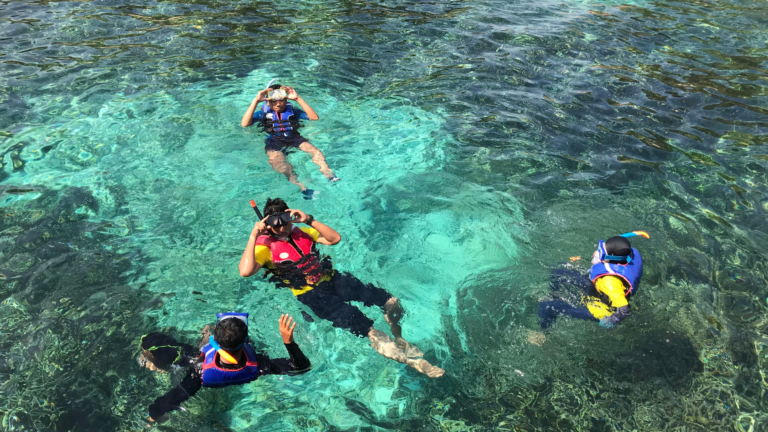
A well-run Zanzibar snorkeling trip supplies all the heavy and specialised equipment, so you don’t need to buy or carry it. On our Mnemba Atoll snorkeling trip, every guest gets a mask, fins and a life jacket, plus a guide who stays in the water alongside you — which is why complete beginners and non-swimmers join us all the time.
Here’s what a proper operator carries so you don’t have to:
- Snorkel gear — mask, fins and snorkel in a range of sizes, including child sizes on request.
- Life jackets — for everyone, including strong swimmers, since marine regulations require them on board.
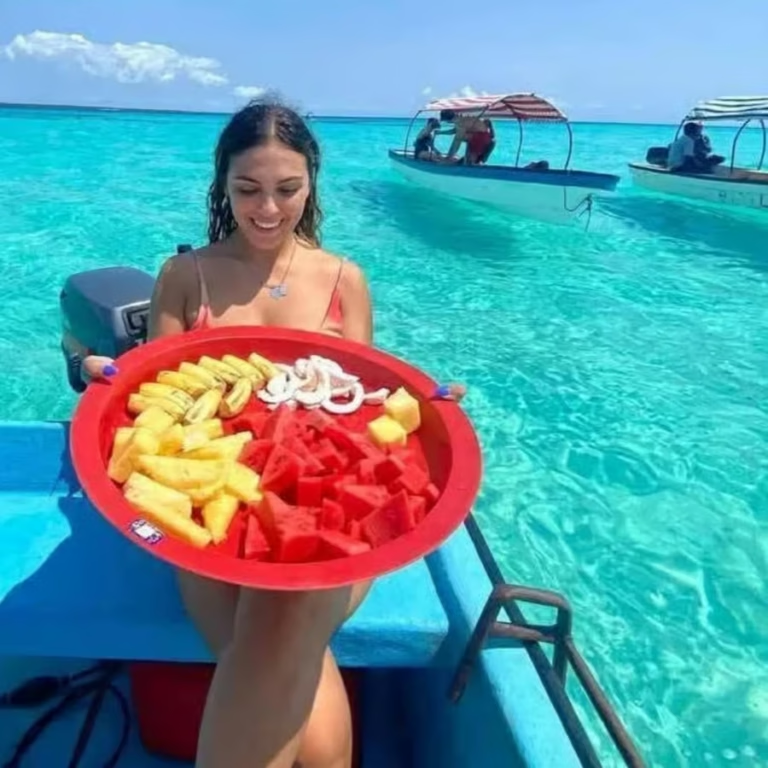
- Food and drink — fresh tropical fruit and drinking water on every trip, and a cooked seafood lunch on full-day excursions like the full-day Safari Blue.
- All permits and fees — Mnemba is a protected marine conservation area with a daily visitor cap, and the entry fees are already built into your tour.
This is also a quick way to judge whether you’ve booked with a serious operator. If a “tour” expects you to arrive with your own mask and life jacket, that tells you something about the boat you’re getting on.
What Should You Bring Yourself?
Your personal packing list is short and fits in a small dry bag. These are the things no operator provides, and the things that make your specific day comfortable.
The essentials are: swimwear, a quick-dry towel, reef-safe sunscreen, a hat, sunglasses, a rash guard, a waterproof phone case or dry bag, a little cash, and any medication you take. That’s genuinely most of it. Everything else below is about doing these few items well.
One item worth calling out: your own mask, if you own a good one. We provide quality masks, but nothing beats a mask you know fits your face without leaking. If you snorkel often, bring it. If you don’t, ours will do the job perfectly.
What Should You Wear on a Zanzibar Snorkeling Boat?
Wear your swimwear under light, loose clothing you can pull off in seconds. Zanzibar boats depart from the beach itself — you’ll often wade to the boat — so there’s nowhere to change once you leave your hotel. Getting dressed for the water before pickup saves you a fumbling, towel-wrapped moment in front of the whole boat.
For the day itself, the smartest thing you can wear is a rash guard or a light long-sleeved top. The equatorial sun on open water is relentless, and your back is exposed and face-down for the entire time you’re snorkelling. A rash guard covers the single most sunburn-prone part of your body and means you reapply far less sunscreen into the reef. The U.S. National Park Service specifically recommends UV-blocking shirts alongside mineral sunscreen for exactly this reason around coral reefs.
Round it out with a wide-brimmed hat, polarised sunglasses (they cut the glare off the water beautifully), and reef sandals or flip-flops you don’t mind getting wet. Skip anything you’d be sad to lose overboard.
Why Does Reef-Safe Sunscreen Matter So Much in Zanzibar?
Because the reefs you’re visiting are protected — and standard sunscreen quietly damages them. Zanzibar’s best snorkelling, at Mnemba Atoll, is a no-take marine conservation area, and that protected status is the whole reason the coral is healthy and the fish are so abundant. Bringing the right sunscreen is part of keeping it that way.
The chemicals to avoid are oxybenzone and octinoxate. According to the National Oceanic and Atmospheric Administration (NOAA), even small amounts of oxybenzone can cause coral bleaching, DNA damage and deformities in developing coral. When dozens of snorkellers a day rinse it into a small protected atoll, it adds up fast.
What to look for instead:
- A mineral sunscreen whose active ingredients are zinc oxide or titanium dioxide only.
- Ignore the words “reef-safe” or “reef-friendly” on the front — those terms are unregulated. Flip the bottle over and read the actual active-ingredient list.
- Better still, cover up with a rash guard and hat so you need less sunscreen at all.
You may struggle to find genuine mineral sunscreen in Zanzibar’s smaller shops, so buy it before you fly. It’s one of the few things on this list you truly can’t pick up locally.
How Do You Keep Your Phone, Cash and Valuables Safe on the Boat?
Use a dry bag or a waterproof phone pouch, and bring only what you’ll actually use. Boats are wet, open and bouncing, and the number-one item we see lost overboard is an unprotected phone.
A few practical rules from the water:
- A floating waterproof phone pouch lets you take reef and dolphin photos without risking your phone — worth every dollar.
- A small dry bag (5–10 litres) holds your phone, cash, sunglasses and medication in one sealed place.
- Bring small cash for tips, a cold drink at the sandbank, or a souvenir — not your entire holiday budget.
- Leave passports, jewellery and spare cards locked in your hotel safe. You don’t need them on a boat.
If you’re travelling as a family or a group, one shared dry bag for the valuables is easier to keep an eye on than five loose phones.
Does What You Bring Change by Tour Type?
Yes — a sunrise snorkel, a full day at sea, and an evening cruise call for slightly different bags. The core kit stays the same, but the extras shift with the trip.
| Trip | When it runs | Pack these extras |
|---|---|---|
| Mnemba Snorkeling | Sunrise, half-day | Rash guard, reef-safe sunscreen, underwater camera |
| Safari Blue Full day | Morning to late afternoon | Extra water, more sunscreen, dry snacks, motion-sickness tablet |
| Nakupenda Sandbank | Midday, tide-dependent | Maximum sun cover — no shade on a sandbank |
| Dolphin Tour | Early morning | Rash guard for cooler start, floating phone pouch |
| Sunset Dhow Cruise | Evening | Light layer for the breeze, insect repellent, no snorkel kit needed |
Caption: The core kit is the same for every trip; these are the extras worth adding for each type of Zanzibar boat excursion.
The pattern is simple: the longer you’re at sea and the less shade there is, the more sun protection, water and food you want on you. A half-day Mnemba trip is forgiving; a full day on Safari Blue or a midday sandbank in open sun is where under-prepared travellers struggle.
What About Seasickness on a Zanzibar Boat Trip?
If you’re prone to motion sickness, prepare before you board — not after. Zanzibar’s morning seas are usually calm, especially in the dry-season months, but the crossing to Mnemba or Safari Blue can still have some swell, and the time to deal with it is on land.
Practical steps that work:
- Take an over-the-counter tablet about an hour before departure. As NOAA notes, motion-sickness medication works best taken before you set sail, not once you feel unwell.
- Watch the horizon, not your phone or your feet. The Mayo Clinic recommends fixing your eyes on a distant, stable point to settle the mismatch between your inner ear and your vision.
- Sleep well the night before and stay hydrated — being tired and dehydrated makes everyone more susceptible.
- Eat something light beforehand. Plain toast or crackers sit better than an empty stomach or a heavy breakfast.
- Pack ginger chews or a motion band if you like — some travellers swear by them.
Choosing calmer months helps too. If seasickness is a real worry for your group, our guide to the best time to visit Zanzibar explains when the seas are flattest.
A Local’s Packing Mistakes to Avoid
A few errors come up again and again on our boats — all easily avoided:
- Bringing standard sunscreen to a protected reef. Buy mineral sunscreen at home; you likely won’t find it here.
- Packing too much. You do not need a beach bag’s worth of stuff. One small dry bag per person or group is plenty.
- Wearing white or brand-new clothes. Boats have engine grease, fruit, and salt spray. Wear things that can get messy.
- No towel. Operators provide fruit and water, not always towels. Bring your own quick-dry one.
- Big cameras with no protection. If it’s not waterproof or in a case, assume it will get splashed.
- Forgetting a change of clothes for the drive back. Sitting in wet swimwear for an hour in an air-conditioned van is nobody’s idea of fun.
Frequently Asked Questions About Zanzibar Boat & Snorkeling Trips
Do I need to bring my own snorkeling gear in Zanzibar?
No. Any reputable Zanzibar operator provides masks, fins, snorkels and life jackets as part of the trip, in adult and child sizes. You only need to bring your own if you own a well-fitting mask you strongly prefer. If a tour expects you to supply your own gear, treat it as a warning sign about the quality of the operator.
What should I wear on a Zanzibar snorkeling boat?
Wear swimwear under light, loose clothes you can remove easily, since boats leave straight from the beach with no changing rooms. Add a rash guard or long-sleeved top to protect your back from the sun while snorkelling, plus a hat and sunglasses. Reef sandals or flip-flops that can get wet are ideal footwear.
Is normal sunscreen allowed on Zanzibar snorkeling trips?
It’s not banned, but you should avoid it out of respect for the reef. Standard sunscreens contain oxybenzone and octinoxate, which harm coral even in tiny amounts. Mnemba and Zanzibar’s other top sites are protected marine areas, so bring a mineral sunscreen with zinc oxide or titanium dioxide instead — and cover up with a rash guard to use less of it.
Can I bring my phone on a Zanzibar boat trip?
Yes, but protect it. Use a waterproof floating pouch or a sealed dry bag, because boats are wet and open, and phones go overboard easily. A floating pouch lets you photograph the reef and dolphins safely. Leave passports and valuables in your hotel safe and bring only small cash.
What is provided on a Zanzibar snorkeling tour?
A good operator provides the boat, captain and guide, all snorkelling equipment and life jackets, fresh tropical fruit, drinking water and soft drinks, and all marine-park and government fees. Full-day trips such as Safari Blue also include a cooked seafood lunch. You simply bring your personal items — swimwear, towel, sunscreen, sun protection and cash.
How do I avoid getting seasick on a Zanzibar boat?
Take an over-the-counter motion-sickness tablet about an hour before departure, sleep well the night before, stay hydrated, and eat something light beforehand. On the boat, watch the horizon rather than looking down. Zanzibar’s morning seas are usually calm, and choosing the dry-season months gives you the flattest water.
Should I bring cash on a snorkeling trip?
Bring a small amount of cash for tips, a drink, or a souvenir, kept in your dry bag. You don’t need large sums — your tour and its fees are already paid when you book. Leave the bulk of your money and cards in your hotel safe.
Do children need anything special for a Zanzibar boat trip?
Child-sized masks and life jackets are available on request, so mention children when you book. Otherwise, pack the same essentials in smaller form: a rash guard, hat, reef-safe sunscreen, a towel and a change of clothes. Snorkelling trips like Mnemba are calm, shallow and family-friendly, with a guide in the water throughout.
Final Thoughts
Packing for a Zanzibar boat and snorkeling trip is refreshingly simple once you know that the operator carries everything heavy and specialised for you. Focus your bag on the few things that make your day comfortable:
- Sun protection first — rash guard, hat, sunglasses and mineral, reef-safe sunscreen.
- A dry bag for your phone, cash and medication.
- A towel and a change of clothes for the ride home.
- Seasickness prep before you board, if you’re prone to it.
Do that, and you’ll step onto the boat with a light bag and nothing to worry about but the turtles, the dolphins and the reef. When you’re ready to get out on the water, browse our Zanzibar boat and snorkeling tours or send us a quick message on WhatsApp we’ll help you pick the right trip and tell you exactly what to bring for it.